
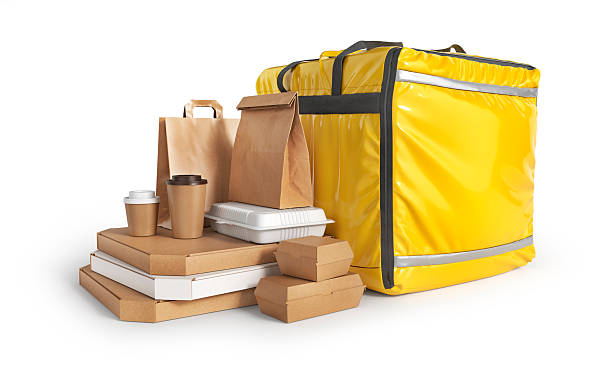
There is a reason why the pizza you ordered gets to you soggy, the iced coffee is not really cold, the sushi is at room temperature, and that it is usually not the restaurants fault. The food was perfect when it left the kitchen. What happened in between is the problem.
Insulated delivery bags are one of the most straightforward solutions in the food delivery chain, yet they’re often underestimated. Whether you’re running a restaurant, managing a fleet of delivery drivers, or starting a catering operation, the bag your food travels in has a direct and measurable impact on what lands in front of the customer. This is no longer about merely keeping things hot or cold. It is about time, maintaining texture flavor food safety, and the whole experience from the moment the order is packed to the moment it is opened at the door.
Temperature Retention Is About More Than Comfort
When customers complain about cold food or melted drinks, they are not being petty. Temperature is strongly connected to the sensory experience of eating. For instance, a hot curry that cools down by 10 degrees during delivery tastes differently the spices don’t blossom the same way, the sauce loses its thickness, and the whole dish becomes tasteless. An iced latte that has been sitting in an uninsulated bag for 20 minutes is not just diluted; it’s a totally different item.
Insulated bags function by reducing the rate of heat exchange between the inside of the bag and the external environment. A well-made bag establishes a thermal barrier that maintains the temperature of hot foods at a level safe for serving and keeps cold drinks cool enough to prevent the rapid melting of ice. The difference between a simple nylon bag and a properly insulated one can be as much as 2030 minutes of temperature retention which is the time frame most local deliveries operate within.
That time frame is all that matters. Achieve it consistently, and you will not only preserve the quality of the food but also ensure its safety. Fail to do so, and you won’t just be risking a negative review, but you will also be encouraging bacterial growth in the temperature danger zone between 40F and 140F.
Why the Right Bag Matters for Drinks Specifically
Delighting with drinks via delivery is a lot harder than most think. The delicate balance of a hot cup of coffee is that it should be kept at a temperature above 140F and, at the same time, stop further brewing and scalding. A cold smoothie is not just a drink anymore – a change in its texture, separation of the ingredients and, warming up are out of the question. Boba tea with tapioca pearls comes to an entirely different ball game with the necessity to be at a sempiternal temperature in order for the pearls not to get hard. These are very small differences, and a normal delivery bag is not at all capable of making these requirements.
Specifically made insulated bags for beverages get it right by marrying, on one hand, thermal insulation and, on the other, structural support. Features like upright compartments, secure closures, and insulated dividers prevent spilling in addition to maintaining temperature. In fact, some bags have separate compartments so that hot and cold items cannot interfere with each other which is exactly the kind of problem that happens when a driver places a hot soup container next to an iced drink in a single uninsulated tote.
Drink-specific insulated carriers from a reliable supplier like Incredible Bags are built with these real-world delivery scenarios in mind, offering purpose-engineered designs rather than generic solutions adapted from grocery totes.
The Impact on Customer Satisfaction and Retention
Delivery platforms depend heavily on ratings, and food temperature happens to be the most joined complaint category on every big app. According to the American Customer Satisfaction Index’s Restaurant and Food Delivery Study, food temperature consistently scores among the lowest-rated aspects of the delivery experience a persistent pain point that directly affects repeat business. Customers who receive their meals at the right temperature tend to rate the restaurant better, they write more positive reviews, and most importantly, they become very loyal to ordering again from the same restaurant. Looking at customer lifetime value in food delivery from a new perspective, the figures are actually pretty staggering. If a single customer orders just twice a month, then reordering that customer is worth a few hundred dollars during a year. Giving away one single customer’s order due to one delivery mistake such as serving cold food, melted ice-cream, or a warm salad is really a cost to the company and not just a matter of quality.
If you follow that loss through the chain, in most cases, it turns out that it was initiated by an inadequate packaging than anything the kitchen might have done wrong. One of the few changes that lead to quality improvement that is completely independent of the kitchen is the upgrade to the properly insulated bags. For this, you do not have to change recipes, retrain cooks, or acquire new kitchen equipment. You make the switch in the bags, and the result is the food being exactly as it was intended to be.
Durability and Long-Term Cost Considerations
Cheap insulated bags fail to work for long. The seams open, the inner lining starts separating, the zipper stops sealing properly, and therefore the insulation is not effective anymore even if the bag can still be closed. Replacing kits every few months will nullify the cost-effectiveness that had made the cheap bags attractive.
High-end bags are made with food-safe PEVA or foil laminate, reinforced stitching, and heavy-duty closures that can withstand repeated daily use inhibitions. For a restaurant or catering that are busy, a bag that lasts for two to three years is generally considered to be a more economical alternative than replacing the fragile ones four times a year. The calculation is not difficult if you add the factor of replacement frequency.
Also, there is the aspect of professional look. Branded or commercial-grade insulated bags convey to the customer that the quality is there, before even opening the food. It is a small but real psychological hint that the care which is visible in the packaging is transferred to the perceived quality of the contents.
Choosing the Right Bag for Your Operation
Not every insulation bag can be used for all purposes. For example, a pizza delivery bag is designed to deliver heat that is flat and dry so that the crust remains crispy. On the other hand, a sushi bag or a cold platter one requires differences insulation properties since the bag should be cold while the cold that is coming from the outside of the bag should not affect the packaging. A mix bag (hot mains with cold drinks) requires a division into compartments that most of the simple ones do not offer.
The important parameters to check are the type of insulation material and its thickness, the closure of the bag, the interior measures of the bag, and also whether the bag is having any drainage or venting features. Establishments in the food service industry with a large volume of orders should also take into account how easy the bags are for cleaning as insulated bags are getting spills, and a lining that is not the one can be properly wiped down becomes a concern of hygiene.
When you get these factors right, the bag becomes a part of delivery that customers don’t notice because everything was delivered exactly as expected. Food delivery service depends on consistency, and a good insulated bag is one of the cheapest ways to ensure it on a large scale. That’s the goal.