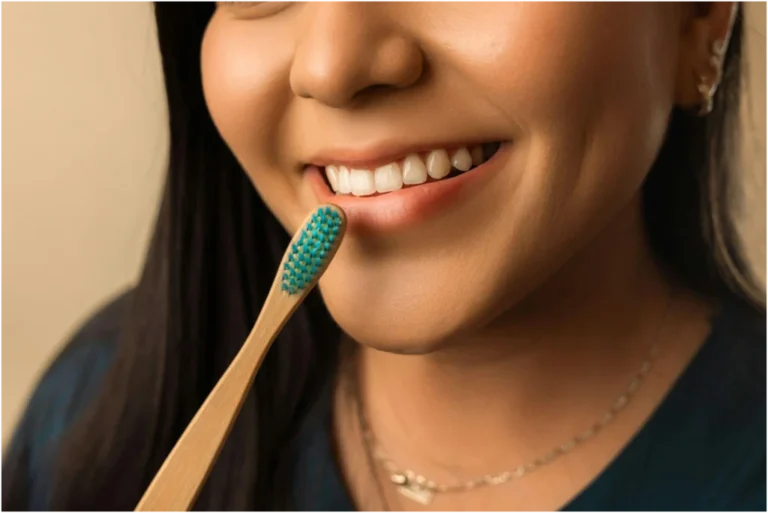

A beautiful smile isn’t just about whiteness; tooth shape and symmetry are equally crucial. If you’re self-conscious about chipped, misshapen, or uneven teeth, modern cosmetic dentistry offers numerous solutions. This guide explores your options for achieving a balanced, harmonious smile, from minor corrections to complete transformations.
Understanding Tooth Shape and Symmetry
Symmetry in dentistry doesn’t necessarily mean that the left side of your mouth is a mirror image of the right. Instead, it refers to a harmonious balance where the teeth relate to each other and the surrounding facial features in a pleasing way.
The Golden Ratio in Dentistry
Dentists often refer to the “Golden Proportion” or the Golden Ratio when designing a smile. This mathematical concept, often found in nature and art, suggests that the width of the central incisors (the two front teeth) should be in a specific proportion to the lateral incisors and canines when viewed from the front.
When teeth follow these ideal proportions, the smile appears natural and attractive. However, when a tooth is too narrow, too short, or oddly shaped, it disrupts the visual flow.
Common Shape Irregularities
Several common issues can affect tooth symmetry:
- Microdontia: A condition where teeth are smaller than average.
- Peg Laterals: When the teeth directly next to the two front teeth are small and pointed.
- Uneven Edges: Caused by natural wear or minor chips.
- Disproportionate Length: When the central incisors are significantly longer than the adjacent teeth, or worn down to be the same flat length as the rest.
What Causes Irregular Tooth Shapes?
Understanding why your teeth look a certain way helps in choosing the right treatment. The causes generally fall into three categories.
Genetics
Genetics are the primary driver of tooth shape. If your parents had small teeth, gaps, or peg laterals, there is a strong chance you inherited those traits. Developmental conditions during childhood can also affect how the enamel forms, leading to pitting or irregular surfaces.
Environmental Factors and Trauma
Accidents happen. A fall or a sports injury can chip or fracture a tooth, instantly altering its shape. Additionally, dietary acids from soda or citrus fruits can erode enamel over time, changing the silhouette of the tooth.
Habits
Bruxism, or chronic teeth grinding, is a major contributor to shape changes in adults. Over years of grinding, teeth can become flattened, short, and squared-off. Nail-biting or using teeth as tools to open packages can also cause micro-fractures and uneven wear patterns.
Methods for Improving Tooth Shape and Symmetry
Cosmetic dentistry is not one-size-fits-all. The best approach depends on the severity of the irregularity, the health of the underlying tooth structure, and your budget.
Dental Bonding
Dental bonding is one of the most accessible and least invasive ways to improve tooth shape.
The Procedure: A dentist applies a tooth-colored resin material to the tooth surface. They mold it to the desired shape, harden it with a special light, and polish it to match the sheen of your natural enamel.
Benefits:
- Usually completed in a single visit.
- Requires little to no removal of natural enamel.
- Cost-effective compared to veneers or crowns.
Limitations: Bonding material is not as strong as natural teeth or porcelain. It is more prone to staining and may need to be replaced every 5 to 7 years.
Porcelain Veneers
Veneers are the gold standard for dramatic smile makeovers. They are thin, custom-made shells designed to cover the front surface of teeth.
The Procedure: The dentist removes a small amount of enamel from the front of the tooth to accommodate the veneer. Impressions are taken, and a lab crafts the porcelain shells. Once ready, they are bonded permanently to the teeth.
Benefits:
- Highly resistant to stains.
- Can correct shape, size, color, and slight misalignment simultaneously.
- Mimics the light-reflecting properties of natural teeth perfectly.
Limitations: The process is irreversible because enamel is removed. It is also a higher financial investment than bonding.
Orthodontic Treatment
Sometimes, the shape of the tooth isn’t the problem—it’s the position. If a tooth is rotated, it might look narrower than it actually is.
The Procedure: By moving the teeth into proper alignment, the perceived shape and symmetry often improve naturally. Treatments range from traditional metal braces to clear aligners like Invisalign. For adults seeking faster results for minor aesthetic spacing or crowding issues, Quick braces or accelerated orthodontics can focus solely on the front teeth to improve symmetry in a shorter timeframe.
Dental Crowns
While veneers cover the front of a tooth, a crown covers the entire visible portion.
When are they necessary? Crowns are typically reserved for teeth that have significant structural damage, large fillings, or have undergone a root canal. If a tooth is severely misshapen due to decay or a break, a crown provides both the aesthetic correction and the structural support needed to save the tooth.
Enameloplasty (Tooth Reshaping)
Also known as recontouring, this is a subtractive method.
The Procedure: The dentist gently sands away tiny amounts of enamel to smooth out chips, round off sharp canines, or level uneven edges.
Benefits:
- Painless and requires no anesthesia.
- Immediate results.
- Permanent fix for minor issues.
Limitations: You can only remove a tiny amount of enamel before risking sensitivity or damage, so this is only suitable for very minor aesthetic tweaks.
Combining Treatments for Optimal Results
Rarely does a smile makeover rely on just one technique. Achieving true symmetry often requires a multi-disciplinary approach.
For example, a patient might use clear aligners to straighten their teeth first. Once the teeth are in position, they might undergo gum contouring to even out the gum line, followed by porcelain veneers on the front four teeth to correct shape discrepancies. This “ortho-restorative” approach ensures that the foundation is solid before the aesthetic work is applied, leading to longer-lasting and more natural-looking results.
Aftercare and Maintenance
Investing in your smile requires a commitment to maintenance. To ensure your results last:
- Maintain Oral Hygiene: Brush twice a day and floss daily. Gum disease can cause gums to recede, altering the look of your smile symmetry.
- Wear a Night Guard: If you have veneers or bonding and you grind your teeth at night, a protective guard is non-negotiable to prevent chipping.
- Watch Your Diet: Avoid biting directly into hard foods like apples or crusty bread if you have bonding or veneers on your front teeth.
- Regular Check-ups: See your dentist every six months. They can polish bonding and check the integrity of veneers or crowns.
Conclusion
A symmetrical smile is about more than just vanity; it is about restoring balance to your face and confidence to your interactions. Whether you need a simple smoothing of a chipped edge or a comprehensive set of veneers, modern dentistry offers tools to correct almost any shape irregularity.