
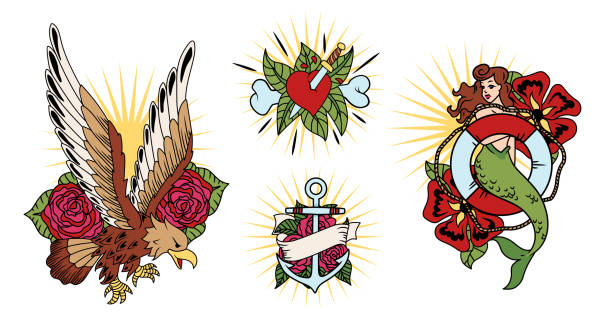
American Traditional tattooing is one of the most enduring and influential tattoo styles in the United States. Known for its bold outlines, limited color palette, and iconic imagery, this style has shaped tattoo culture for more than a century. While tattoo trends continue to evolve, American Traditional remains a cornerstone of the industry, respected by both veteran artists and new enthusiasts.
More than just a visual style, American Traditional tattooing reflects the cultural, social, and historical development of tattoo art in America.
Historical Roots of American Traditional Tattooing
The origins of American Traditional tattoos date back to the late 1800s and early 1900s, when tattooing became popular among sailors, soldiers, and traveling workers. These individuals were exposed to tattoo traditions from Polynesia, Japan, and Southeast Asia, which were later adapted to suit Western aesthetics and available tools.
Early American tattoo artists simplified complex designs into bold, readable images. This adaptation was partly technical — early tattoo machines and inks were limited — but it also created a distinct visual identity that set American tattooing apart from other global traditions.
Norman “Sailor Jerry” Collins played a crucial role in refining this style. His standardized approach to linework, color usage, and flash designs became the foundation of what is now recognized as American Traditional tattooing.
Defining Characteristics of the Style
American Traditional tattoos are instantly recognizable due to several consistent design elements.
Bold Linework
Thick black outlines are essential to the style. These lines help maintain clarity over time and prevent ink from spreading excessively as the tattoo ages.
Limited Color Palette
Traditional designs typically use red, yellow, green, blue, black, and occasionally brown. These colors were chosen because they held up well with early tattoo inks and remain effective today.
Simple, High-Impact Imagery
Rather than focusing on fine detail, American Traditional tattoos rely on strong shapes and symbolism. Each design is meant to be understood quickly and clearly.
Common American Traditional Tattoo Motifs
Certain images have become synonymous with American Traditional tattooing. These motifs are not random decorations; each carries symbolic meaning.
- Anchors represent stability and grounding
- Eagles symbolize freedom, strength, and national pride
- Swallows are associated with safe travel and returning home
- Roses express love, balance, and sacrifice
- Daggers often symbolize protection, struggle, or loss
These designs have remained relevant across generations, contributing to the timeless appeal of the style.
Technical Foundations Behind American Traditional Tattoos
American Traditional tattooing places a strong emphasis on technical fundamentals. Clean lines, consistent depth, and solid color packing are essential for producing long-lasting results.
Because of this, many beginner tattoo artists study traditional designs when learning the basics of tattooing. Practicing bold linework and simple shading helps develop essential skills such as hand stability, machine control, and ink saturation. It is common for beginners to explore these fundamentals while working with a tattoo starter kit, as the straightforward nature of traditional designs allows for focused technical practice.
Tools and Materials Used in the Style
While tattoo technology has advanced significantly, the core tools used in American Traditional tattooing remain largely the same. Coil machines were historically preferred for their strong, consistent hit, especially for lining.
Equally important is needle selection. To achieve the thick outlines and solid fills associated with the style, artists rely on appropriate tattoo gun needles, such as round liners for outlines and magnums for color packing. Proper needle configuration ensures that the tattoo heals well and retains its visual strength over time.
Why American Traditional Tattoos Age Well
One of the primary reasons American Traditional tattoos continue to be popular is their durability. The combination of bold outlines, minimal detail, and solid color application allows these tattoos to age gracefully.
Unlike highly detailed realism tattoos that may lose definition over time, American Traditional designs remain readable even after decades. This longevity has contributed to the style’s reputation as a reliable and timeless choice.
American Traditional Tattoo in Modern Culture
Despite its historical roots, American Traditional tattooing remains highly relevant in contemporary culture. Many modern artists continue to work exclusively in this style, while others blend traditional elements with neo-traditional or illustrative approaches.
Tattoo collectors often choose American Traditional designs for their authenticity and cultural significance. In an era of rapidly changing trends, this style represents consistency, craftsmanship, and respect for tattoo history.
Cultural Significance in the United States
American Traditional tattoos are closely tied to themes of freedom, individuality, and resilience — values deeply embedded in American culture. Historically, tattoos were symbols of rebellion and independence, especially during times when body art was socially stigmatized.
Today, American Traditional tattooing serves as a bridge between the past and present, honoring the pioneers of the craft while continuing to inspire new generations.
Conclusion
American Traditional tattooing stands as one of the most important styles in U.S. tattoo history. Its bold aesthetics, symbolic imagery, and technical discipline have ensured its survival through changing trends and cultural shifts.
Whether appreciated as a form of self-expression, historical art, or technical foundation for tattoo artists, American Traditional tattoos remain a powerful and lasting element of American tattoo culture.